
Implications of Local Economic Linkages and Social Transformation of the Blimbingsari Village Community After the Operation of the Indonesia Pilot Academy Banyuwangi
DOI:
https://doi.org/10.52074/skyhawk.v6i2.385Keywords:
Multiply effect, Pilot school, Rural development, Social transformationAbstract
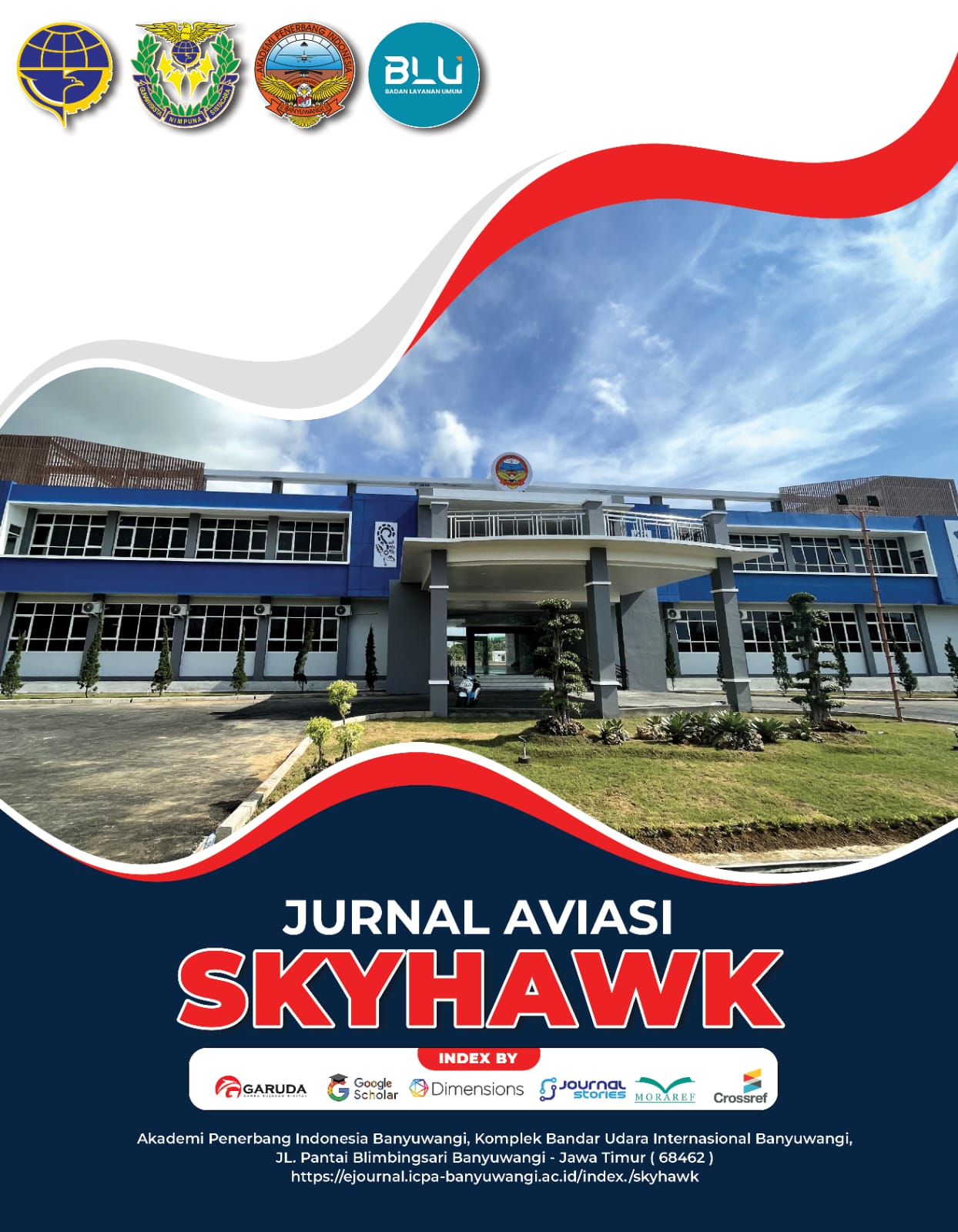
The presence of large-scale educational institutions in rural areas can trigger significant economic and social change for surrounding communities, as seen in Blimbingsari Village, Rogojampi District, Banyuwangi Regency, since the Indonesian Pilot School Banyuwangi (APIB) began operating. This study examines how APIB's economic local economic linkages influences residents' income and the social transformation that follows. Unlike previous studies focused on airports or commercial plantations, this research fills a gap in the rarely studied context of agrarian-fishing villages directly adjacent to aviation academies, combining qualitative and quantitative analysis in one case study. Data were collected through in-depth interviews with 24 informants and questionnaires from 64 respondents in Blimbingsari Village. Results show APIB's impact is differential: business actors gained the most direct economic benefits, farmers and fishermen experienced greater social change, and housewives recorded the highest expectation scores despite moderate perceived benefits. The study enriches growth center theory, showing that benefit distribution from an anchor institution depends on each group's interaction with it, underscoring the need for village economic resilience through BUMDes optimization and business diversification, reducing dependence on one institution.
Downloads
Published
How to Cite
Issue
Section
License
Copyright (c) 2026 Untung Lestari, Andung Luwihono, Ahmad Hariri, Ahmad Mubarok, Ahnis Zulkarnain

This work is licensed under a Creative Commons Attribution-ShareAlike 4.0 International License.